
May 29, 2026
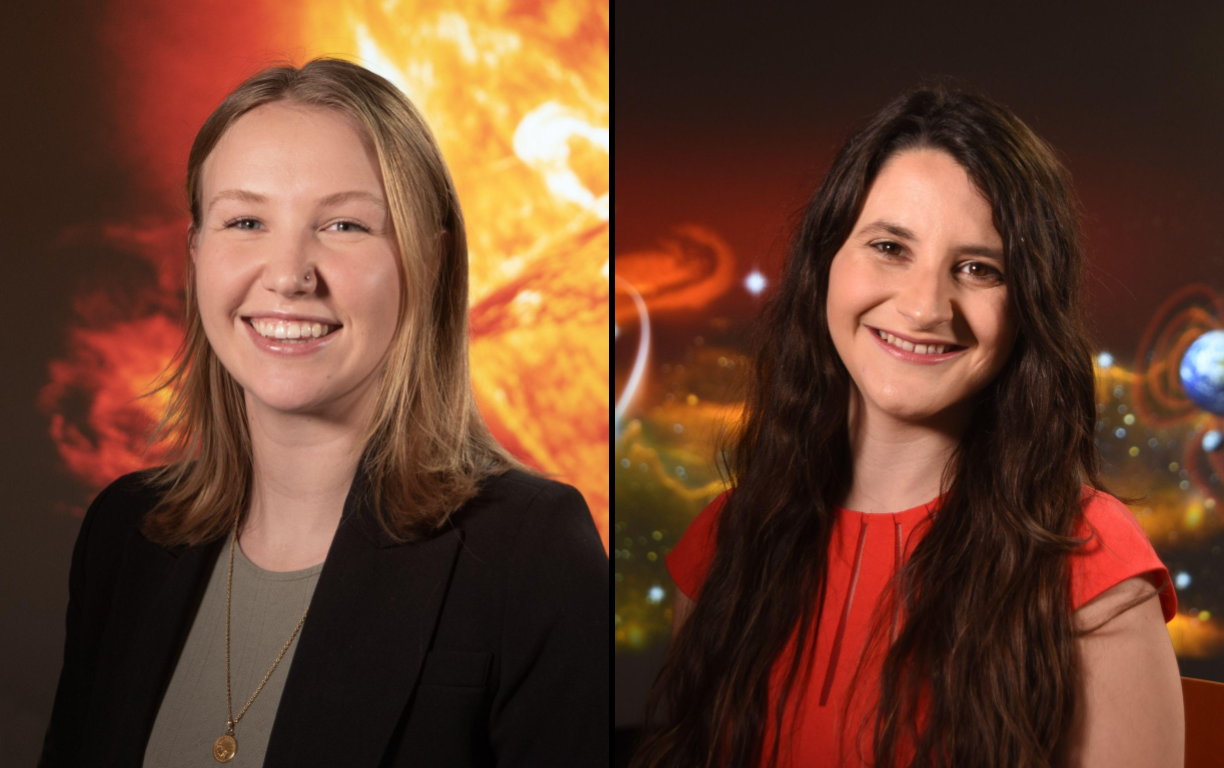
Melissa Kane (left) and Carina Alden (right), both enrolled in the Applied Space Weather Research (ASWR) master’s program directed by Dr. Vadim Uritsky, currently serve as full-time space weather analysts with NASA’s Moon to Mars Space Weather Analysis Office (M2M SWAO). The office is responsible for monitoring experimental space weather scoreboards and analyzing, modeling, and documenting space weather activity throughout the solar system to support and protect NASA’s human and robotic missions.
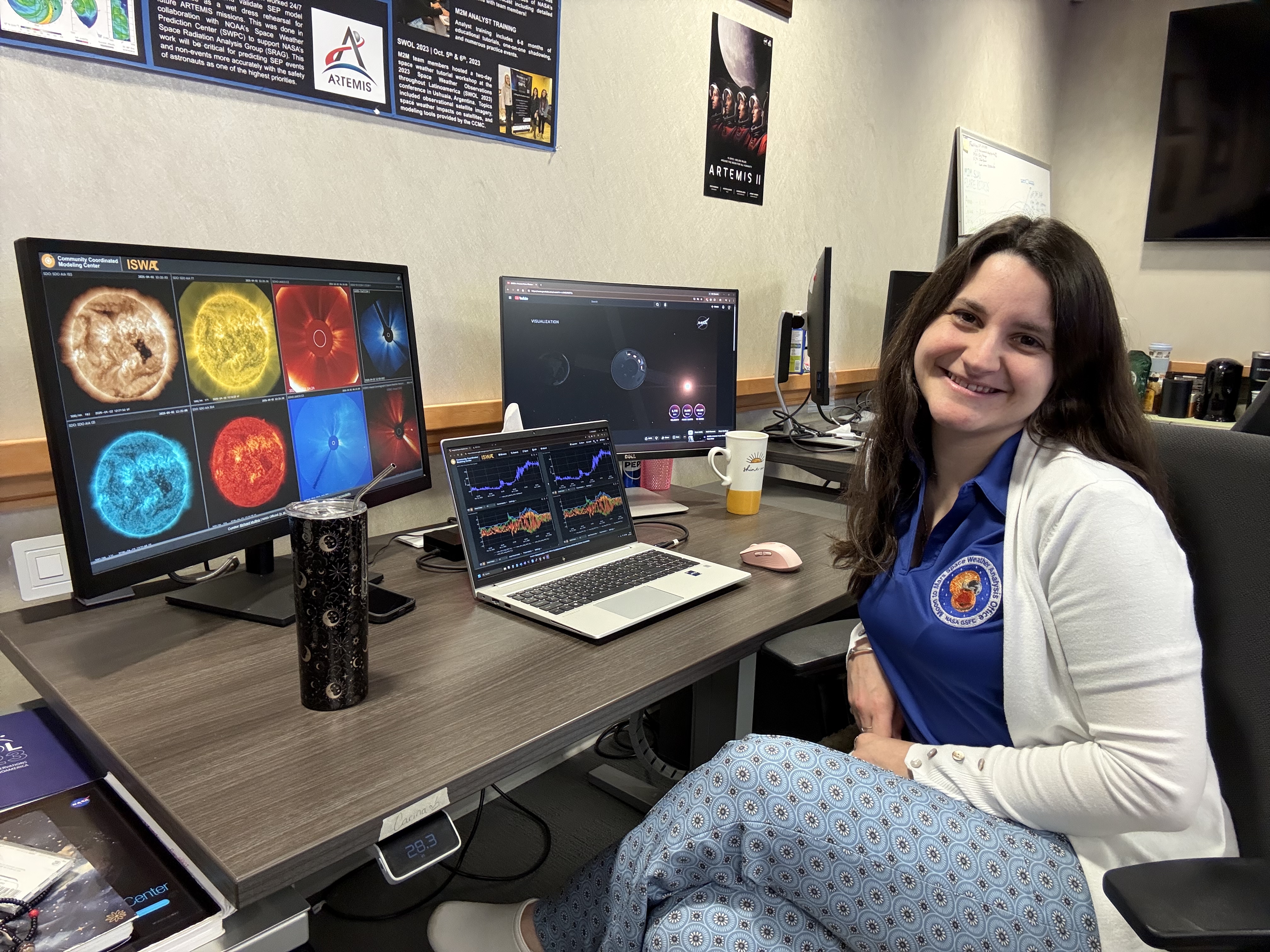 As analysts with M2M SWAO, Kane and Alden contributed to the recent Artemis II mission through continuous space weather analysis supporting mission control operations. Their work included data acquisition, model prototyping, and analysis of the dynamic space weather environment affecting crewed spaceflight operations.
Artemis II is NASA’s first crewed lunar mission in more than 50 years and marks a critical milestone in preparing for future human missions to Mars. The mission sent four astronauts around the Moon, advancing long-term lunar exploration goals and deep-space operational capabilities.
While at Johnson Space Center, Kane also toured NASA’s Mission Control facilities, including the Flight Control Room, Orion spacecraft training modules, and International Space Station (ISS) training systems.
Alden, who serves as a space weather analyst, outreach and training coordinator, and communications liaison, has been with M2M SWAO for more than five years. During her tenure, she has supported both the Artemis I and Artemis II missions as an overnight analyst, contributing to mission continuity and operational forecasting efforts.
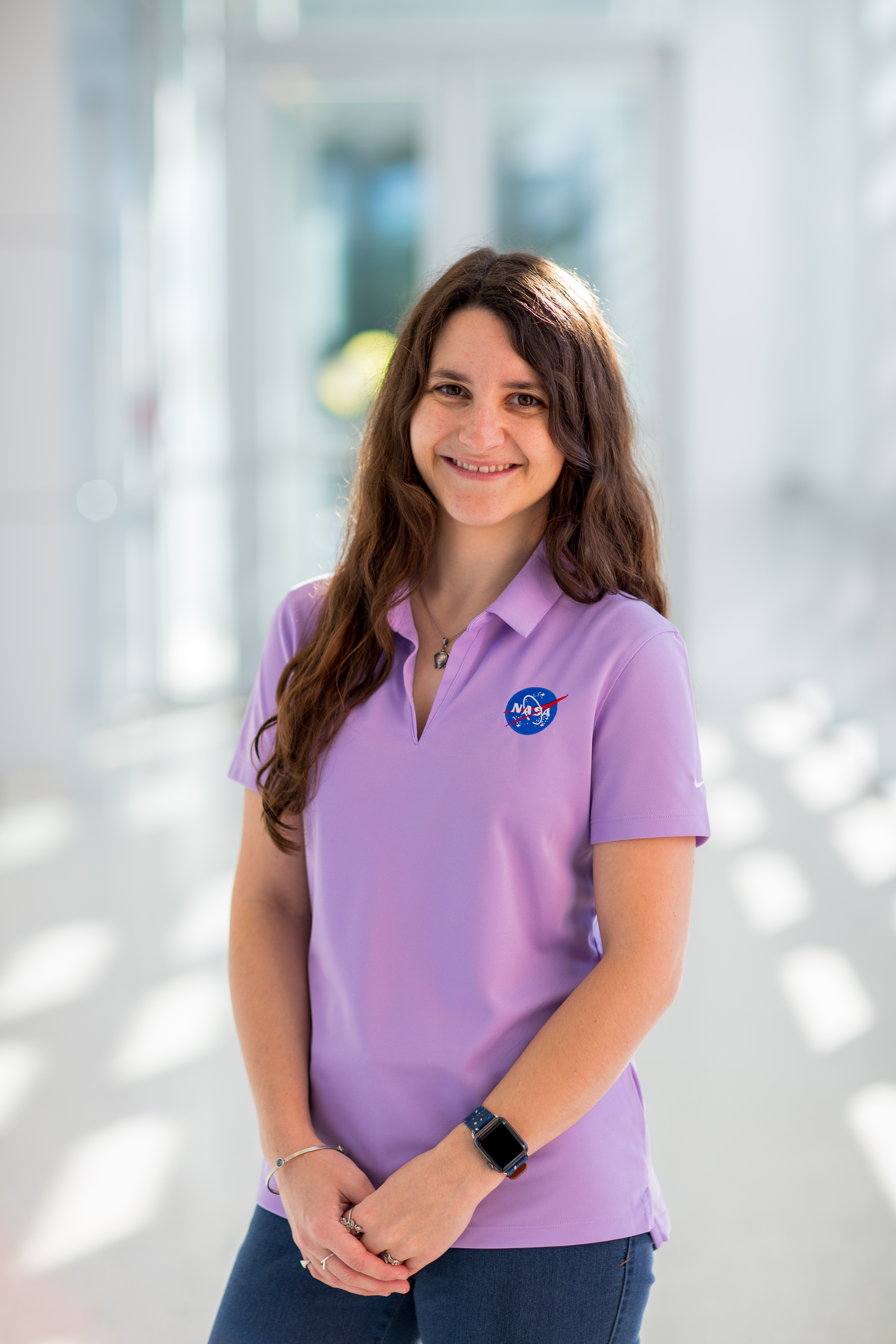 Through the Applied Space Weather Research master’s program, both students continue to deepen their understanding of heliophysics, space environment modeling, and the physical processes that drive space weather forecasting.
“The ASWR program has really pulled back the curtain for me, connecting the underlying physical processes with the large-scale impacts of space weather phenomena, which has made me a better analyst overall,” said Kane.
Alden also emphasized the impact of the program on her professional development. “Thanks to the coursework in the program, I’m diving deeper into the mysteries of the Sun and learning how the physics behind the forecasts work within the space weather framework,” she said.
The contributions of Kane and Alden reflect the growing impact of interdisciplinary engineering and applied science education in advancing space exploration, scientific research, and mission-critical operations.