
July 15, 2026
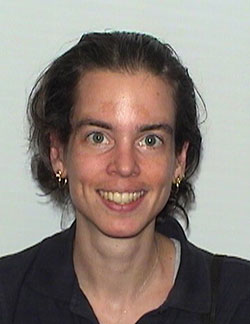
An internationally recognized expert in nuclear physics, Horn's research focuses on the atomic nucleus and the subatomic particles that make up matter. Her work has advanced scientific understanding of nuclear structure while fostering technology transfer partnerships among universities, national laboratories, and small businesses. She has chaired numerous international conferences and workshops, and has authored more than 100 peer-reviewed publications in medium-energy nuclear physics.
Horn earned her Ph.D. in Physics from the University of Maryland in 2006 and completed a postdoctoral fellowship at the Thomas Jefferson National Accelerator Facility (Jefferson Lab) before joining the Catholic University faculty in 2009. Since 2011, she has held a joint appointment with Jefferson Lab.
The NSF-funded research program will investigate the underlying quark-gluon structure of protons and neutrons, as well as the pions and kaons that help bind them together within atomic nuclei. By incorporating artificial intelligence and machine learning (AI/ML) techniques, the project aims to accelerate data analysis and improve the efficiency of scientific research in contemporary nuclear physics.
In addition to advancing fundamental science, the project will support the development of next-generation subatomic particle detectors used at particle accelerator facilities. The grant will also provide research and training opportunities for graduate, undergraduate, and high school students, equipping them with experience in advanced instrumentation and AI/ML-informed software development.
Research in nuclear physics has contributed to advances across numerous fields, including computing, healthcare, national security, and economic development. This NSF award reflects The Catholic University of America's continued commitment to advancing scientific discovery while preparing the next generation of researchers and technology leaders.