
March 03, 2026
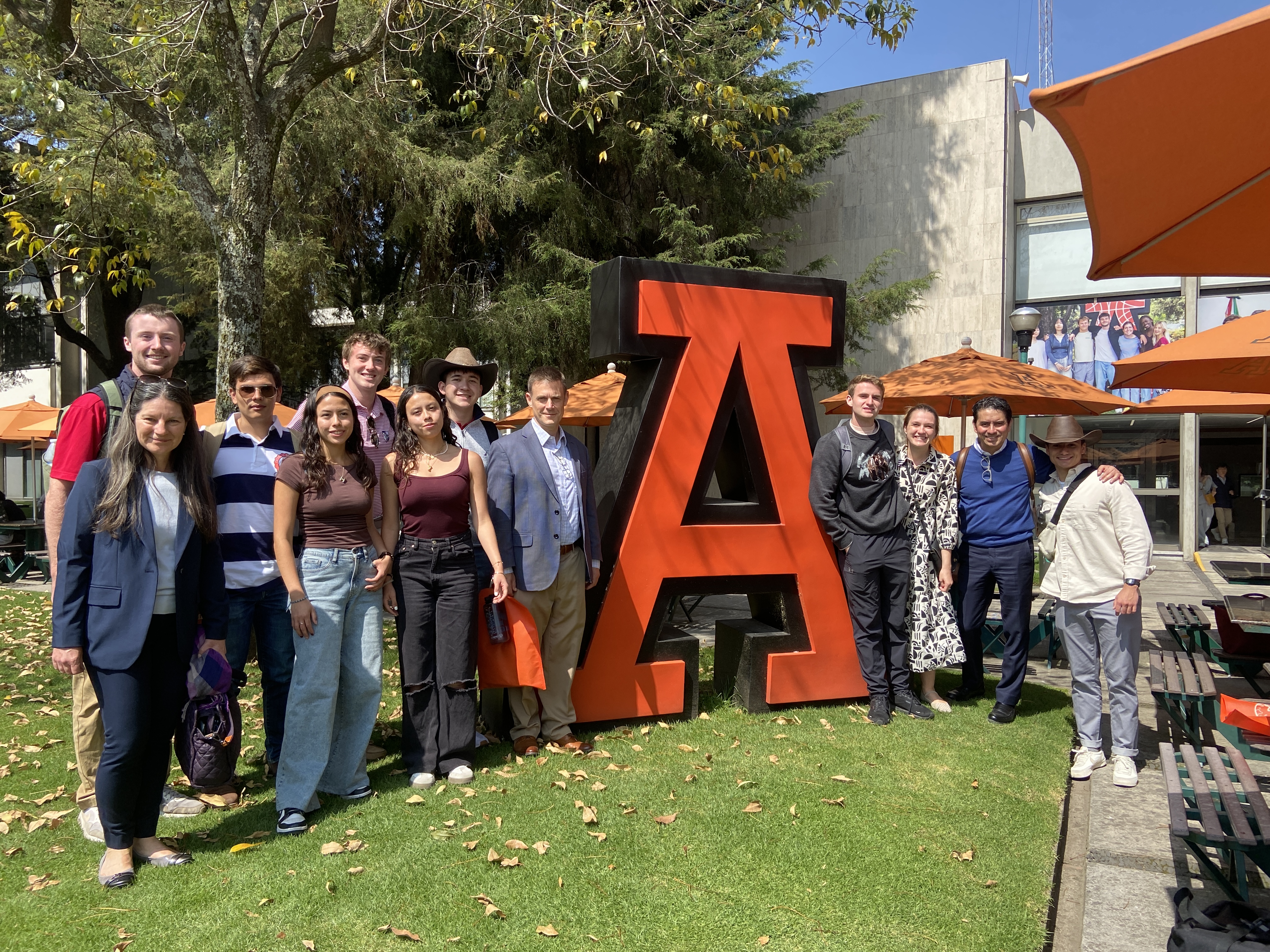
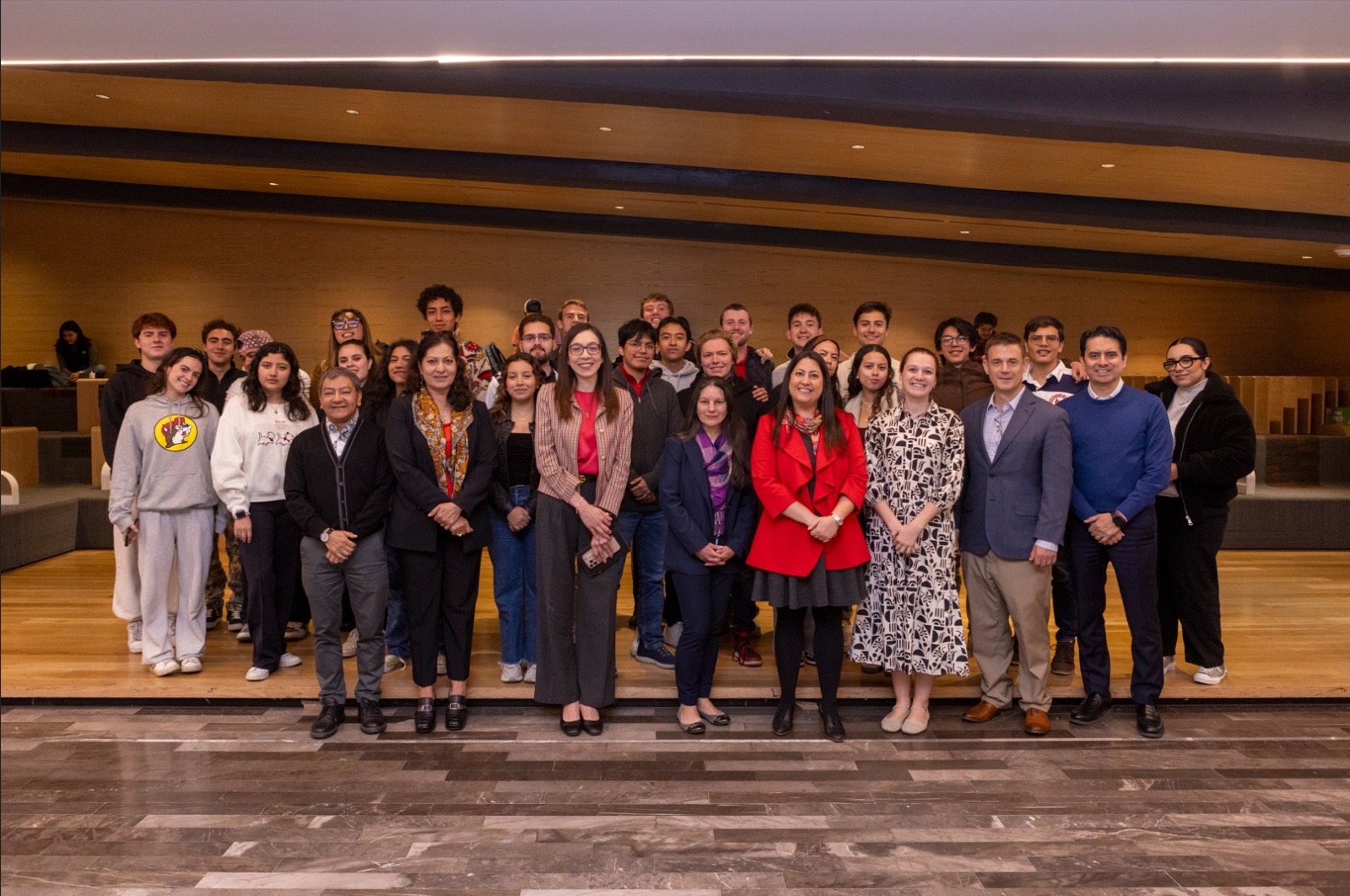
In partnership with Universidad Anáhuac México, the initiative prepared students to address complex sustainability and climate resilience challenges through interdisciplinary collaboration and cultural exchange.
The program was supported by a $25,000 award from the 100,000 Strong in the Americas Innovation Fund, with core funding from Amazon and Global Affairs Canada, along with the U.S. Department of State’s Bureau of Western Hemisphere Affairs. The grant supports continued collaboration between the institutions and fully funded student and faculty travel.
Throughout the week, students engaged directly with Mexico City’s infrastructure, sustainability strategies, and cultural heritage. On their second day, they attended Mass at the Basilica of Our Lady of Guadalupe, where they observed firsthand the visible effects of foundation settlement, or the sinking and shifting of a building’s base over time, caused by the city’s historic lake bed conditions.
“Since most of us are civil engineers, it was fascinating to observe this firsthand and to think about how such a historic structure could be preserved despite these challenges,” said Mike Tyszko (Civil Engineering ’26). “Seeing civil engineering challenges in person gave me a perspective that I would not have gained from coursework alone. Gap bridged.”
Students also participated in a lecture on smart cities with Dr. Arturo Flores López, discussing how Mexico City can improve transportation to incentivize sustainability, efficiency, and safety. They explored green walls, water collection systems, and other urban sustainability initiatives that demonstrated innovative climate resilience strategies. Hands-on workshops reinforced these lessons, with students creating “seed bombs” to support ecosystem restoration and learning about herb cultivation and sustainable planting practices.
“I’ve come back from this trip understanding more about the importance of urban agriculture and the positive impact that it holds to create a sustainable and healthy change to the environment,” said Jack McKenna (Civil Engineering ’27). “I am very thankful to Partners of the Americas for providing the grant to send us to Mexico City to learn about this matter and meet the great people from Universidad Anáhuac México.”
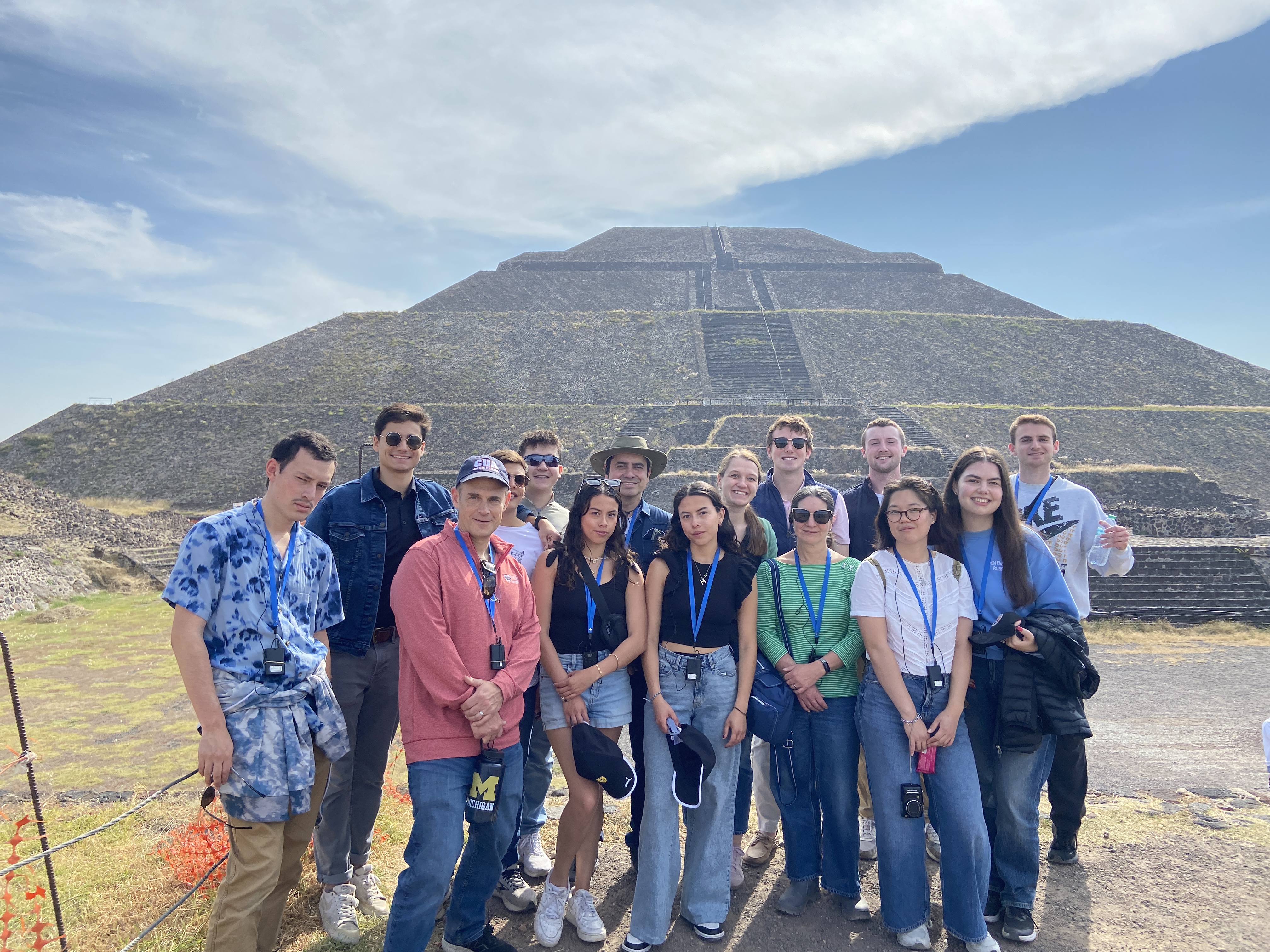
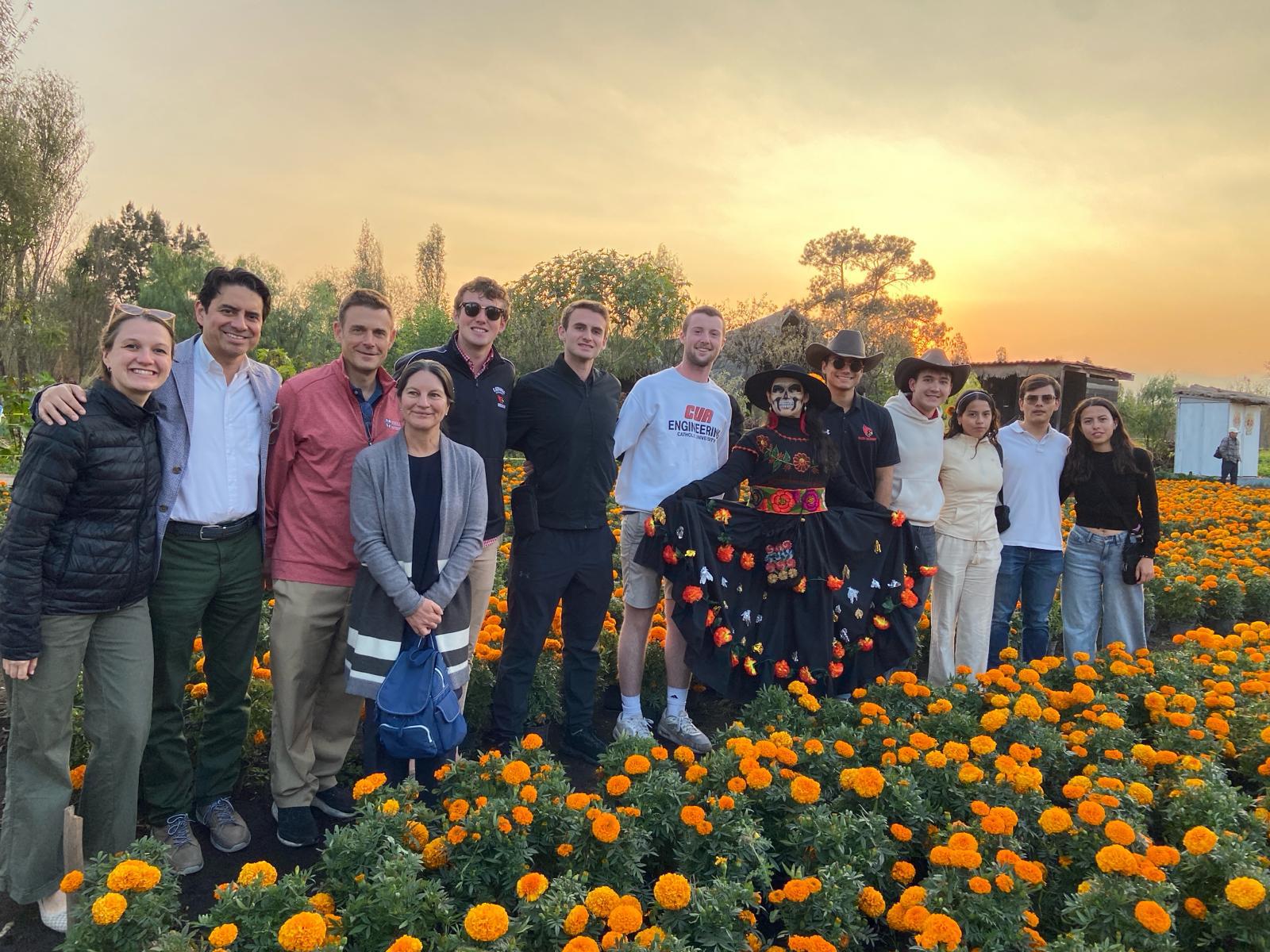
Beyond technical learning, the exchange fostered meaningful cultural connection. Students toured Teotihuacán, attended the Día de los Muertos parade in the Zócalo, visited the National Museum of Anthropology, explored Xochimilco, and even attended a Club América fútbol match. “Our first day in Mexico was quite the busy one,” said Jack McKenna. “The parade was unlike anything I’ve ever experienced. The atmosphere of the parade and fútbol match was surreal—the city is full of electric energy.”
The relationships formed between students from both universities were equally impactful. Friendly soccer matches, shared meals, and long van rides across the city created space for authentic dialogue and friendship. Anáhuac student Majo reflected on the exchange: “Talking about food, football, music, and our relationship with God made us realize that we have more in common than what we thought… It was an amazing experience, and I am very thankful for it.”
Drs. Jason Davison and Rebecca Kiriazes of the Department of Civil and Environmental Engineering led the initiative for the College of Engineering, Physics, and Computing. They were joined on the trip by Dr. John Judge, a faculty member in the Department of Mechanical Engineering and former Dean of the College. The program was made possible through close collaboration with Universidad Anáhuac faculty Dr. Arturo Flores López and Dr. Alina Gamboa Combs, whose partnership was instrumental in organizing site visits, lectures, and cultural programming.
The program’s primary goal was to equip engineers and future leaders with both technical expertise and intercultural competence. By integrating STEM, the humanities, and community-based learning, Catholic University and Universidad Anáhuac provided students with hands-on exposure to real-world climate resilience challenges while deepening their understanding of cultural context and global collaboration.
While this phase of the exchange has concluded, the experience significantly strengthened the relationship between Catholic University and Universidad Anáhuac. Faculty from both institutions are now in conversation about future collaborations and additional opportunities for interdisciplinary and international engagement.
As students returned to Washington, D.C., they carried with them not only technical insights, but also new friendships and a broader global perspective—exactly the kind of formation needed to address the complex sustainability challenges of the future!