
Department
School
Expertise
Bio
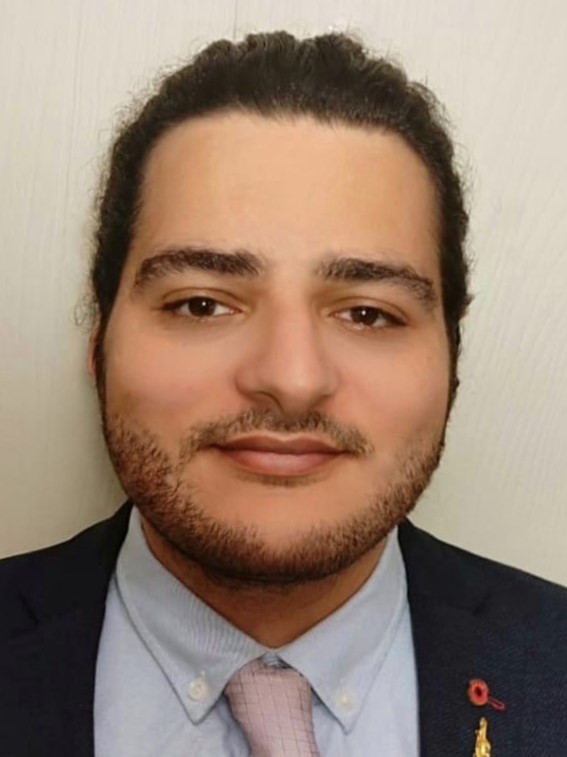
Dominick Rizk, Ph.D., is currently a professor in the Department of Computer Science, with a secondary appointment in the Department of Electrical and Computer Engineering, and the director of Center for Advanced Research in Computer Engineering (CARCE). Dr. Rizk earned a Bachelor of Engineering in Computer and Communication Engineering, Summa Cum Laude, from Notre Dame University. He received his M.S. and Ph.D. degrees in Computer Engineering from the University of Louisiana at Lafayette (R1 Carnegie classification), where he co-founded the Laboratory for Advanced Studies Research. He also served as a Post-doctoral Research Fellow at ULL.
His area of specialization is comprised of the dynamic relationship between software and hardware. His research interests include hardware security, social cybersecurity, high-level computational systems, artificial intelligence, data science and analytics, Internet of Medical Things (IoMT), data privacy and security, quantum and neuromorphic computing, conservative logic, high-performance computer architecture, deep learning optimization, hardware-software co-design, heterogeneous computing, Field Programmable Gate Arrays (FPGA), VLSI, AI hardware accelerators, and emerging technologies. Dr. Rizk has collaborated actively with researchers in several other disciplines of informatics, computer science, and engineering, ranging from theory to design to implementation, and has published several research papers in top-tier conferences and journals. He has also served as a reviewer for numerous prestigious conferences and journals as well. Dr. Rizk has also served as a judge for the Louisiana Region VI Science and Engineering Fair. As a researcher and advocate for innovation, he is constantly seeking new ways to apply cutting-edge technologies to solve real-world problems and improve the lives of people.
Dr. Rizk is a licensed Professional Engineer with a wide range of industry expertise and a member of the Order of the Engineer in the United States. He is the recipient of the prestigious ULL Dissertation Completion Fellowship, a lifetime member of the Phi Kappa Phi honor society, and a professional member of ACM and IEEE. He is also a member of the IEEE Young Professionals, IEEE Biometrics Council, IEEE Council on Electronic Design Automation, IEEE Council on RFID, IEEE Council on Superconductivity, IEEE Nanotechnology Council, IEEE Sensors Council, IEEE Systems Council , IEEE Computer Society Special Technical Community on Autonomous Driving Technologies, IEEE Computer Society Special Technical Community on Cyber Security, IEEE SIGHT, IEEE Computer Society Special Technical Community on Internet of Everything, IEEE Quantum Community, IEEE Standards Association, IEEE Computer and Quantum Society. Dr. Rizk is also the recipient of many prestigious awards including the President's Award for Educational Excellence and Outstanding Academic Achievement and the Ragin' Leadership Academy Award. Dr. Rizk has been selected as the sole recipient of the GDIT award through the ORAU Ralph E. Powe Junior Faculty Enhancement Award, and he has received a perfect score of 30/30 in the evaluation process. In recognition of his pioneering research contributions, Dr. Rizk was inducted into the Hall of Fame at the Notre Dame University. Dr. Rizk was awarded the Best Employer Award from the On-Ramps to Careers on behalf of CUA, in recognition of his contributions to workforce development in AI. Dr. Rizk has been recognized nationally for his thought leadership and impactful research. He was honored as the keynote speaker for the Ph.D. Pinning Ceremony at the University of Louisiana at Lafayette. Dr. Rizk’s groundbreaking inventions and novel research contributions have also been highlighted by several international media outlets, further demonstrating the global relevance and societal impact of his work. These features have brought attention to the practical significance of his innovations and their potential to shape future technological development across multiple domains. Dr. Rizk was also honored as a DataCamp Ambassador, recognizing his dedication to advancing AI and data science education and fostering a community of learners.
Beyond academia, Dr. Rizk's community service efforts are distinctive and extensive. He serves as a volunteer with a number of state and non-profit organizations and was named a Goodwill Ambassador.
Teaching
Spring 2026
- CSC 306 - Introduction to Operating Systems
- CSC 326 - Switching Circuits and Logic Design
- EE 326 - Switching Circuits and Logic Design
- ENGR 442 - Interdisciplinary Senior Design II (Mentoring)
Fall 2025
- CSC 390 - Computer Organization and Architecture
- ENGR 441 - Interdisciplinary Senior Design I (Mentoring)
Summer 2025
- CSC 484 - Introduction to Machine Learning
- CSC 584 - Introduction to Machine Learning
- DA 515 - Introduction to Machine Learning
- AI 315 - Introduction to Machine Learning
Spring 2025
- CSC 306 - Introduction to Operating Systems
- CSC 326 - Switching Circuits and Logic Design
- EE 326 - Switching Circuits and Logic Design
- ENGR 442 - Interdisciplinary Senior Design II (Mentoring)
Fall 2024
- CSC 390 - Computer Organization and Architecture
- ENGR 441 - Interdisciplinary Senior Design I (Mentoring)
Spring 2024
- CSC 306 - Introduction to Operating Systems
- CSC 326 - Switching Circuits and Logic Design
- EE 326 - Switching Circuits and Logic Design
- ENGR 442 - Interdisciplinary Senior Design II (Mentoring)
Fall 2023
- CSC 390 - Computer Organization and Architecture
- ENGR 441 - Interdisciplinary Senior Design I (Mentoring)
Student Mentees
Graduate Mentees
- Sandeep Shiraskar (Ph.D. Computer Science) (Fall 2025- present)
- Hossein Beyzavi (Ph.D. Electrical Engineering) (Spring 2025- present)
- Sammy Noman (Ph.D. Computer Science) (Fall 2024- present)
- Abeer Albluwi (Ph.D. Computer Science) (Fall 2024- Spring 2026)
- Yawar Syed (M.S. Electrical Engineering) (Spring 2024 - Fall 2025)
- Moses Kiprono (M.S. Data Analytics) (Fall 2024 - Spring 2026)
- Abdul Khadar Shaik (M.S. Computer Science) (Fall 2024- Spring 2025)
- Sara Al Buainain (Ph.D. Computer Science) (Fall 2024 - Spring 2025)
- Sandeep Shiraskar (M.S. Computer Science) (Fall 2024- Spring 2024)
- Khalid Khawaji (Ph.D. Computer Science) (Fall 2023- Spring 2024)
- Alireza Omidi (Ph.D. Electrical Engineering) (Fall 2023 - Spring 2024)
Selected Publications
2026
- 3D-DeepZern: a deep convolutional neural network for tomographic reconstruction based on Zernike polynomials, Applied Optics 65 (10), D25-D37, 2026
- Improving Brain Tumor Diagnosis and Multiclassification with Capsule Network-Based Deep Learning”, SPRINGER NATURE, Lecture Notes in Artificial Intelligence, #41. (in press)
- Retinal Grading Enhanced using Vision Transformers and Hybrid Models for Diabetic Retinopathy Detection, 8th International Conference on Recent Trends in Image Processing & Pattern Recognition, Marrakech, Morocco (in press).
- SwinRH-DeBlur: A Unified CNN-Swin Transformer Residual Hybrid Deblurrer for Realistic Motion Blur Removal, 8th International Conference on Recent Trends in Image Processing & Pattern Recognition, Marrakech, Morocco (in press).
- High-Assurance Bot Detection on Steam: A Hybrid Ensemble Learning Framework for Detecting Automated Steam Accounts Using Profile Metadata, Conference in Artificial Intelligence, 2026. (accepted)
- Can Large Language Models Be Trusted for AI-Based Intrusion Detection in Cybersecurity? An Evidence-Grounded Log Analysis, Conference in International Intelligence, 2026 (accepted)
- SwiNNEt-Galaxy: Hierarchically Constrained and Rotation-Aware Hybrid CNN-Transformer for Galaxy Morphology Regression (accepted)
- Appearance-Based Cyberbullying Detection in Dialectal Arabic: A New Gulf Body-Shaming Benchmark and MARBERTv2 based Classification Framework (accepted)
- Less Fine-Tuning, Richer Semantics: Selective Decoder-Only Parameter-Efficient Fine-Tuning for Vision-Language Model Adaptation under Extreme Resource Constraints (accepted)
2025
- KAN-MID: A Kolmogorov-Arnold Networks-Based Framework for Malicious URL and Intrusion Detection in IoT Systems, IEEE Access, 2025
- Leveraging Capsule Networks for Robust Brain Tumor Classification and Detection in MRI Scans, Proceedings of ICAART 2025, ISBN: 978-989-758-737-5.
2024
- Advancements in Brain Tumor Detection: Utilizing Xception Enhanced Tumor Identifier Network, 2024 2nd International Conference on Artificial Intelligence, Blockchain, and Internet of Things (AIBThings).
- A Unified Approach for Binary-Class and Multi-Class Data Augmented Generation, 2024 IEEE Conference on Artificial Intelligence (CAI), Singapore, Singapore, 2024, pp. 69-74.
- RAPUF: A Novel Integration of Reversible Logic and Arbiter Physical Unclonable Functions for Enhancing IoT Security, in Proc. of International Conference on Artificial Intelligence, Computer, Data Sciences and Applications (ACDSA 2024) 1-2 February 2024, Victoria-Seychelles.
- Optimized Vision Transformer Training using GPU and Multi-threading, 2024 IEEE Conference on Artificial Intelligence (CAI), Singapore, Singapore, 2024, pp. 1043-1044.
- A low-cost full-scale auto eye-tracking system for mobility-impaired patients. Urban & Fischer, 174, 155023, 2024.
- Dominick Rizk, Rodrigue Rizk, Frederic Rizk and Ashok Kumar, "An Economic Uniqueness-Improved Reliable Reconfigurable RO PUF for IoT Security," 2022 IEEE International Symposium on Circuits and Systems (ISCAS), 2022, pp. 1680-1684.
- Dominick Rizk, Rodrigue Rizk, Ashok Kumar, and Magdy Bayoumi, “A Cost-Efficient Reversible-Based Configurable Ring Oscillator Physical Unclonable Function,” 2021 IEEE 34th International System-on-Chip Conference (SOCC), 2021, pp. 79-82.
- Dominick Rizk, Rodrigue Rizk, Frederic Rizk and Ashok Kumar, “An In-Situ Sliding Window Approximate Inner-Product Scheme Based on Parallel Distributed Arithmetic for Ultra-Low Power Fault-Tolerant Applications,” 2021 IEEE International Midwest Symposium on Circuits and Systems (MWSCAS), 2021, pp. 503-506.
- Dominick Rizk, Rodrigue Rizk, Frederic Rizk, and Ashok Kumar, “An In-Situ Sliding Window Approximate Inner-Product Scheme Based on Distributed Arithmetic for Ultra-Low Power Fault-Tolerant Applications,” 2021 IBM IEEE CAS/EDS – AI Compute Symposium, 2021.
- Dominick Rizk, Rodrigue Rizk and Sonya Hsu, “Applied Layered-Security Model to IoMT,” 2019 IEEE International Conference on Intelligence and Security Informatics (ISI), 2019, pp. 227-227.
- Dominick Rizk, “An In-Situ Sliding Window Approximate Inner-Product Scheme Based on Parallel Distributed Arithmetic for Ultra-Low Power Fault-Tolerant Applications,” R1 University Research Showcase, 2022.
- Rodrigue Rizk, Dominick Rizk, Frederic Rizk, and Ashok Kumar, “A Hybrid Capsule Network-based Deep Learning Framework for Deciphering Ancient Scripts with Scarce Annotations: A Case Study on Phoenician Epigraphy,” 2021 IEEE International Midwest Symposium on Circuits and Systems (MWSCAS), 2021, pp. 617-620.
- Rodrigue Rizk, Dominick Rizk, Frederic Rizk, and Ashok Kumar, “A Hybrid Capsule Network-based Deep Learning Architecture for Deciphering Ancient Scripts with Scarce Annotations,” 2021 IBM IEEE CAS/EDS – AI Compute Symposium, 2021.
- Frederic Rizk, Dominick Rizk, Rodrigue Rizk and Ashok Kumar, "A Cost-Efficient Reversible-Based Reconfigurable Ring Oscillator Physical Unclonable Function," 2022 IEEE International Symposium on Circuits and Systems (ISCAS), 2022, pp. 1685-1689.
- Rodrigue Rizk, Dominick Rizk, Frederic Rizk, Ashok Kumar and Magdy Bayoumi, "A Resource-Saving Energy-Efficient Reconfigurable Hardware Accelerator for BERT-based Deep Neural Network Language Models using FFT Multiplication," 2022 IEEE International Symposium on Circuits and Systems (ISCAS), 2022, pp. 1675-1679.
- Rodrigue Rizk, Dominick Rizk, Frederic Rizk, and Ashok Kumar, “An Efficient Capsule Network Reconfigurable Hardware Accelerator for Deciphering Ancient Scripts with Scarce Annotations,” 2021 34th IEEE International System-on-Chip Conference (SOCC),
- Rodrigue Rizk, Dominick Rizk, Ashok Kumar, and Magdy Bayoumi, “Demystifying Emerging Nonvolatile Memory Technologies: Understanding Advantages, Challenges, Trends, and Novel Applications,” 2019 IEEE International Symposium on Circuits and Systems (ISCAS), 2019, pp. 1-5.
- Rodrigue Rizk, Dominick Rizk, Vijay Srinivas Tida, and Sonya Hsu, “War on “Fact Check” -- the Path to Magic 270,” Social-cybersecurity in Times of Crisis and Change, Center for Informed Democracy and Social - cybersecurity (IDeaS), Carnegie Mellon University, 2020.
- Chady El Moucary, Abdallah Kassem, Dominick Rizk, Rodrigue Rizk, Sawan Sawan and Walid Zakhem, "Commodious Control Apparatus for Impaired People," 2022 International Conference on Microelectronics (ICM), Casablanca, Morocco, 2022, pp. 16-20.
- Frederic Rizk, Rodrigue Rizk, Dominick Rizk, and Henry Chu, “MAGAN: A Meta-Analysis for Generative Adversarial Networks’ Latent Space,” in Proceedings of the 12th International Conference on Pattern Recognition Applications and Methods – ICPRAM, 2023, pp. 488-494.
- Rodrigue Rizk, Dominick Rizk, Frederic Rizk, and Sonya Hsu, “280 Characters to the White House: Predicting 2020 U.S. Presidential Elections from Twitter Data,” Computational and Mathematical Organization Theory (2023):1-28.